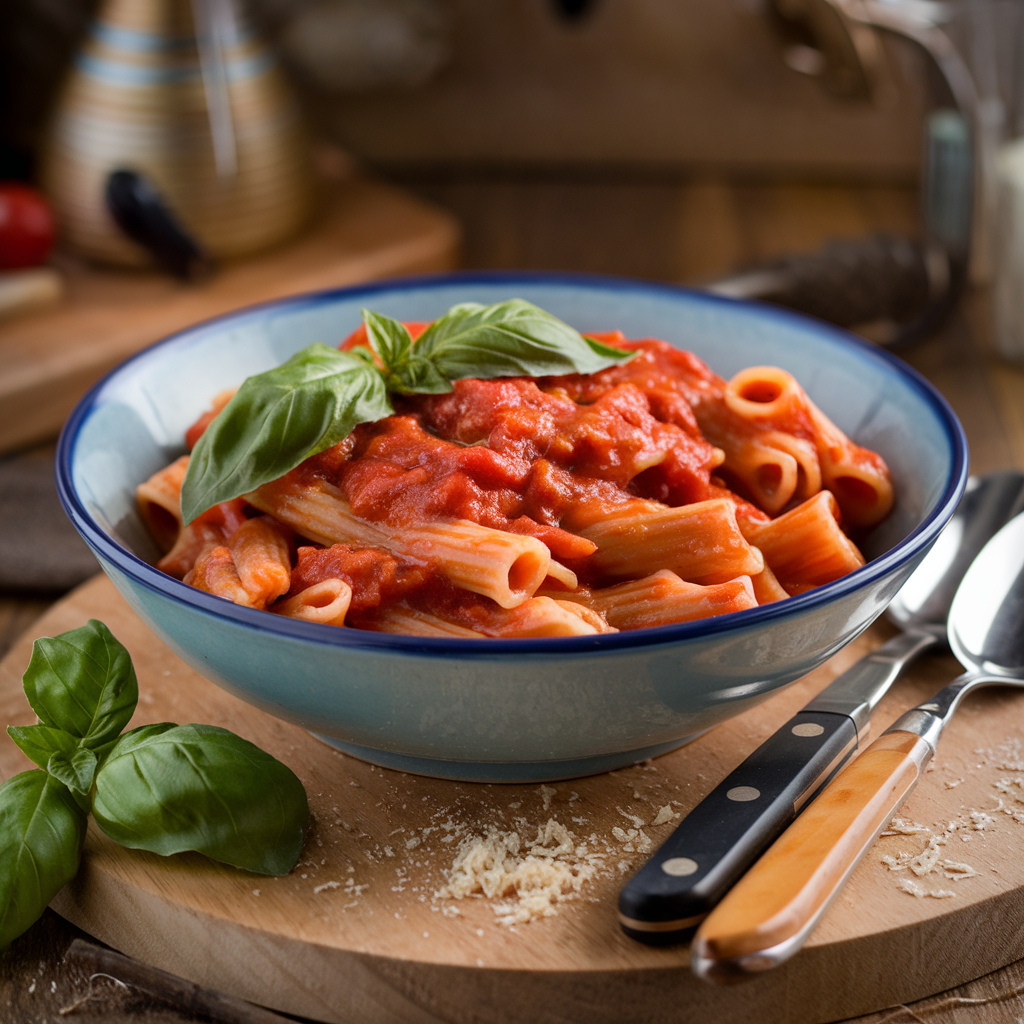
Whole Wheat Pasta with Tomato Sauce: Simple, Healthy, and Deeply Satisfying
Prep Time: 10 minutes | Cook Time: 25 minutes | Total Time: 35 minutes | Servings: 2 | Calories: ~420 per serving
There is a version of pasta with tomato sauce that is quick and forgettable, and another that is genuinely, deeply satisfying — the kind you eat slowly and feel good about long after the bowl is empty. The difference between them is almost entirely a matter of technique, not ingredients.
This recipe uses whole wheat pasta for extra fibre and a nutty depth that pairs beautifully with a proper tomato sauce. And by “proper,” I mean one that is cooked slowly enough for the onion to become sweet, the garlic to mellow, and the tomatoes to collapse into a rich, glossy sauce that clings to every strand of pasta. Not a sauce that’s been rushed. Not a sauce from a jar dressed up with fresh basil. A real tomato sauce, made in about 20 minutes, that tastes like someone who cared made it.
Once you understand the technique, this becomes one of the most reliable recipes in your repertoire — fast enough for a Tuesday evening, good enough for a dinner party.
Why Whole Wheat Pasta Is Worth It
Most people switch to whole wheat pasta reluctantly and then discover they actually prefer it. Here’s what you get with the swap:
More fibre: Whole wheat pasta contains around 6g of fibre per 100g compared to 2–3g in regular pasta. Fibre supports digestive health, feeds beneficial gut bacteria, and slows the absorption of glucose — which means more sustained, even energy without the blood sugar spike and crash that white pasta can cause.
More protein: Whole wheat pasta has slightly more protein per serving — around 8–10g versus 6–8g in white pasta — making it marginally more filling.
More nutrients: The bran and germ of the wheat grain are retained in whole wheat pasta, which means more B vitamins (particularly niacin and thiamine), iron, magnesium, and zinc.
Better flavour with bold sauces: The nutty, slightly earthy flavour of whole wheat pasta can feel too strong with delicate cream sauces. But with a robust tomato sauce — especially one with garlic, olive oil, and fresh basil — it works extraordinarily well. The earthiness of the pasta complements the acidity of the tomatoes in a way that white pasta simply doesn’t.
Cooking tip: Whole wheat pasta benefits from being cooked for the full recommended time on the packet, sometimes a minute longer. It can go from slightly underdone to perfect faster than white pasta — taste it frequently in the last couple of minutes.
Ingredients
For 2 generous servings:
For the pasta:
- 200g whole wheat pasta — spaghetti, linguine, or penne all work well
- A generous amount of salt for the pasta water — it should taste like mild seawater
- 1 tbsp extra virgin olive oil — tossed through after draining
For the tomato sauce:
- 2 large ripe tomatoes (about 300g), roughly chopped — or 1 can (400g) of good quality chopped tomatoes
- 1 medium onion, finely diced
- 3 garlic cloves, minced or thinly sliced
- 2 tbsp extra virgin olive oil
- 1 tsp tomato purée (paste) — intensifies the tomato flavour
- ½ tsp dried oregano
- Pinch of sugar — balances the acidity of the tomatoes
- Small handful of fresh basil — half stirred in, half scattered over at the end
- Salt and black pepper to taste
- Splash of pasta cooking water (about 3–4 tbsp) — the secret ingredient
To serve:
- Freshly grated Parmesan — or nutritional yeast for a vegan version
- Extra fresh basil leaves
- A drizzle of extra virgin olive oil
- Chilli flakes — optional, for gentle heat
Ingredient Notes
Fresh vs canned tomatoes: Fresh ripe tomatoes make a slightly lighter, fresher sauce. In summer, when tomatoes are genuinely ripe and sweet, they’re the best choice. In winter, a good quality tin of Italian chopped tomatoes (San Marzano if you can find them) will produce a richer, more deeply flavoured sauce than watery out-of-season fresh tomatoes. Don’t feel obligated to use fresh — this is one of those cases where the right tinned tomatoes genuinely beat inferior fresh ones.
Olive oil: This is not the dish to use a neutral vegetable oil. Extra-virgin olive oil is fundamental to the sauce’s character. Its fruity, peppery flavour is a real flavour component here, not just a cooking medium. Use a decent bottle.
Tomato purée: Just one teaspoon added early in the cooking concentrates and deepens the tomato flavour dramatically. It’s an optional step that costs you nothing and adds a lot.
The pasta water: This is the most important secret in Italian pasta cooking. The starchy water left after cooking pasta emulsifies with the olive oil in the sauce, creating a glossy, cohesive coating that clings to the pasta rather than pooling at the bottom of the bowl. Always save a cup before you drain. A few tablespoons added to the sauce and tossed with the pasta transforms the texture entirely.
Parmesan: Freshly grated from a block melts into the hot pasta in seconds and distributes evenly. Pre-grated tends to be drier and less flavourful. For a vegan version, nutritional yeast (2 tablespoons) gives a remarkably similar savoury, cheesy note.
How to Make Whole Wheat Pasta with Tomato Sauce — Step by Step
Step 1: Start the Sauce First
The sauce takes longer than the pasta, so start it first. Heat 2 tablespoons of olive oil in a wide, deep frying pan or saucepan over medium-low heat — not high. The goal at this stage is gentle softening, not browning.
Add the finely diced onion with a pinch of salt. Cook slowly for 8–10 minutes, stirring occasionally, until the onion is completely soft, translucent, and just beginning to turn golden at the edges. This slow cooking converts the onion’s starches to sugars, creating a naturally sweet base for the sauce. Rushing this step is the most common mistake in pasta sauce — 8 minutes makes a genuinely different sauce than 3 minutes.
Step 2: Add Garlic and Tomato Purée
Add the minced garlic and tomato purée to the softened onion. Stir constantly for 1–2 minutes over medium heat. The garlic should smell fragrant, and the tomato purée should deepen slightly in colour as it cooks. Watch the garlic carefully — it goes from golden to bitter and burnt in under a minute.
Add the dried oregano and stir for another 30 seconds, allowing the dried herb to bloom in the hot oil.
Step 3: Add the Tomatoes
Add the chopped tomatoes (or tinned tomatoes). Season with a pinch of sugar, salt, and black pepper. Stir to combine everything, breaking up any larger pieces of tomato with the back of a spoon.
Increase the heat to medium and bring to a gentle bubble, then reduce to a low simmer. Cook uncovered for 15–18 minutes, stirring occasionally, until the sauce has thickened, the tomatoes have collapsed completely, and the oil is no longer sitting separately on the surface but has been absorbed into the sauce. The texture should be rich and cohesive, not watery.
Taste and adjust seasoning — it may need more salt, an extra pinch of sugar if too acidic, or more black pepper.
Step 4: Cook the Pasta
While the sauce simmers, bring a large pot of water to a rolling boil. Add a very generous amount of salt — the water should taste pleasantly salty, like mild seawater. This season, the pasta from within as it cooks is not negotiable.
Add the pasta and cook according to the packet instructions, checking for doneness frequently in the last 2 minutes. Whole wheat pasta is best when genuinely al dente — tender throughout but still with a slight firmness when you bite through.
Before draining: Scoop out 1 full cup of the starchy pasta cooking water and set aside. This is essential — don’t skip it.
Drain the pasta.
Step 5: Bring It All Together
Add the drained pasta directly to the pan with the tomato sauce over low heat. Add 3–4 tablespoons of the reserved pasta water. Toss and stir vigorously for 60–90 seconds — this is the most important step. The combination of heat, tossing, pasta starch, and olive oil creates the emulsified, glossy coating that makes restaurant pasta taste different from home pasta.
Add half the fresh basil and toss once more. The sauce should coat every strand or piece of pasta evenly — if it looks dry, add another splash of pasta water. If it looks too loose, keep tossing over the heat for another minute.
Drizzle with a little extra virgin olive oil off the heat.
Step 6: Serve Immediately
Divide between warm bowls. Scatter the remaining fresh basil over the top. Add freshly grated Parmesan. A crack of black pepper and a small drizzle of good olive oil to finish.
Eat immediately — pasta waits for nobody. The sauce continues to absorb as it sits, and the texture changes within minutes.
The Three Techniques That Make This Sauce Extraordinary
1. Cook the onion slowly. Eight to ten minutes over medium-low heat. This is the foundation. Rushing it gives you a sharp, slightly raw-tasting onion in your sauce. Doing it properly gives you a sweet, mellow, deeply savoury base.
2. Use the pasta water. The starchy water emulsifies the sauce and creates that restaurant-quality glossy coating. It also adjusts the consistency perfectly — too thick, add pasta water; too thin, keep tossing over the heat. It is the most underused technique in home pasta cooking.
3. Toss the pasta in the sauce in the pan. Don’t plate the pasta and spoon sauce on top. Instead, add the drained pasta to the sauce in the pan and toss over heat for 60–90 seconds. The pasta finishes cooking in the sauce, absorbs its flavour, and the starch on the pasta surface combines with the oil and tomatoes to create a genuine emulsion. This is how Italian pasta is always finished, and it makes a significant difference.
Variations to Try
Arrabbiata (Spicy Version)
Add 1–2 teaspoons of dried chilli flakes along with the garlic. Traditional arrabbiata uses no herbs — just garlic, olive oil, tomatoes, and chilli. Bold, simple, and fiery.
Puttanesca
Add 8–10 Kalamata olives (pitted and roughly chopped), 1 tablespoon of capers (rinsed), and 4 anchovy fillets (they melt completely into the sauce and add extraordinary depth — even people who claim to dislike anchovies usually love this). Add these with the tomatoes.
Add Roasted Vegetables
Roast diced courgette, aubergine, or cherry tomatoes at 200°C for 20–25 minutes until caramelised. Fold through the finished pasta sauce just before serving for extra texture and nutrition.
With Italian Sausage (Non-Vegan)
Remove the casing from 2 Italian sausages and crumble the meat into the pan after the onion is cooked. Brown well, then add the garlic and continue as normal. Rich, meaty, and deeply satisfying.
Creamy Tomato Version
Stir 3–4 tablespoons of double cream or coconut cream into the finished sauce before adding the pasta. The cream tempers the acidity of the tomatoes and creates a gorgeous, silky pink sauce.
Whole Roasted Cherry Tomato Sauce
Instead of chopping tomatoes, place 400g whole cherry tomatoes in a roasting dish with the garlic cloves (whole, unpeeled), olive oil, salt, and dried oregano. Roast at 200°C for 25 minutes until bursting and caramelised. Squeeze out the garlic and mash everything together for a sweet, intensely flavoured sauce with a more rustic texture.
Meal Prep Tips
The sauce keeps beautifully: Make a double or triple batch of the tomato sauce and refrigerate for up to 5 days or freeze for up to 3 months. It actually deepens in flavour over 2–3 days. Reheat gently in a pan with a splash of water, then cook fresh pasta and combine.
Freeze in portions: Freeze the sauce in individual portions in zip-lock bags or small containers. Defrost overnight in the fridge or briefly in a bowl of warm water. Having a batch of homemade sauce in the freezer means this meal is genuinely a 15-minute dinner on any night.
Don’t store pasta and sauce together: If storing leftovers, keep the pasta and sauce in separate containers where possible. Pasta continues absorbing sauce as it sits, and combined leftovers can become thick and clumped. Stored separately and reheated with a splash of water, both keep well for 2 days.
Batch cook pasta: Cook a large batch of pasta, toss with a little olive oil to prevent sticking, and refrigerate for up to 3 days. Reheat briefly in boiling water for 60 seconds, then combine with freshly heated sauce.
What to Serve Alongside
Whole wheat pasta with tomato sauce is a complete, satisfying meal on its own. For a fuller spread:
- Garlic bread: Toast slices of sourdough brushed with olive oil, garlic, and a pinch of salt under the grill for 3–4 minutes — the only thing that makes this meal more satisfying
- Simple green salad with lemon and olive oil — the freshness cuts through the richness of the pasta perfectly
- Caprese salad — sliced tomatoes and mozzarella with fresh basil and olive oil — elegant and effortless
- Steamed or sautéed spinach with garlic and olive oil — adds iron and greens to the meal
- A glass of Italian red wine — Chianti, Sangiovese, or Montepulciano are all classic pairings with tomato-based pasta
Frequently Asked Questions
Can I use any pasta shape? Yes — this sauce works with any pasta shape. Long pasta (spaghetti, linguine, tagliatelle) coats beautifully in the smooth sauce. Short pasta (penne, rigatoni, fusilli) traps the sauce inside its ridges and tubes. Both are equally good — use whichever you have or prefer.
My sauce tastes too acidic. How do I fix it? Two things help: a pinch of sugar (add it a little at a time and taste) and more cooking time. Acidity mellows significantly with longer, slower cooking. If your fresh tomatoes are particularly sharp, try adding a small pinch of bicarbonate of soda — it neutralises acidity without adding sweetness.
Can I make this vegan? Yes — simply skip the Parmesan and use nutritional yeast instead (2 tablespoons stirred in or sprinkled on top). Everything else in the recipe is already plant-based.
Why does my sauce look watery? Either the tomatoes had high water content (common with fresh tomatoes out of season), or the sauce wasn’t cooked long enough. Keep simmering uncovered over medium heat, stirring occasionally, until the excess water has evaporated and the sauce looks thick and glossy.
Can I use dried basil instead of fresh? Dried basil can substitute in the sauce (add ½ tsp with the oregano), but doesn’t work as a garnish — it turns dark and tastes dusty when scattered on top. If you have no fresh basil, a small drizzle of good olive oil and extra Parmesan on top more than compensates.
Why does my pasta stick together after draining? Two causes: not enough salt in the cooking water (salt helps the surface of the pasta), or it was left to sit in the colander too long. Always transfer drained pasta straight into the sauce — never let it sit and cool. If it does stick, toss with a small drizzle of olive oil to loosen it.
Nutrition Information (Per Serving)
| Nutrient | Amount |
| Calories | ~420 kcal |
| Carbohydrates | 62g |
| Protein | 13g |
| Fat | 14g |
| Fibre | 9g |
| Sugar | 8g |
| Iron | 20% DV |
| Magnesium | 18% DV |
| Vitamin C | 25% DV |
| B Vitamins | Thiamine, Niacin, B6 |
Values are approximate and will vary based on pasta brand and the amount of Parmesan used.
Final Thoughts
Whole wheat pasta with tomato sauce is one of the great simple recipes — not simple as in easy to do brilliantly, but simple in the best sense: a small number of humble ingredients, treated with care, producing something more than the sum of its parts.
The slow-cooked onion. The bloomed garlic. The tomatoes collapse into a glossy sauce. The pasta is tossed vigorously with pasta water until everything is cohesive and shining. These techniques cost you nothing except a little attention, and they transform this from a forgettable weeknight meal into something you’ll actively look forward to making again.
For more healthy pasta and grain dishes, check out my Mushroom Wheat Berry Risotto and Mediterranean Quinoa Salad.
Get the basics right once, and this recipe becomes one you make on autopilot for years. Let me know in the comments if you tried any of the variations — the roasted cherry tomato version is particularly special.
Happy cooking!
Made this recipe? Share it on Pinterest or Facebook — I love seeing your pasta bowls!