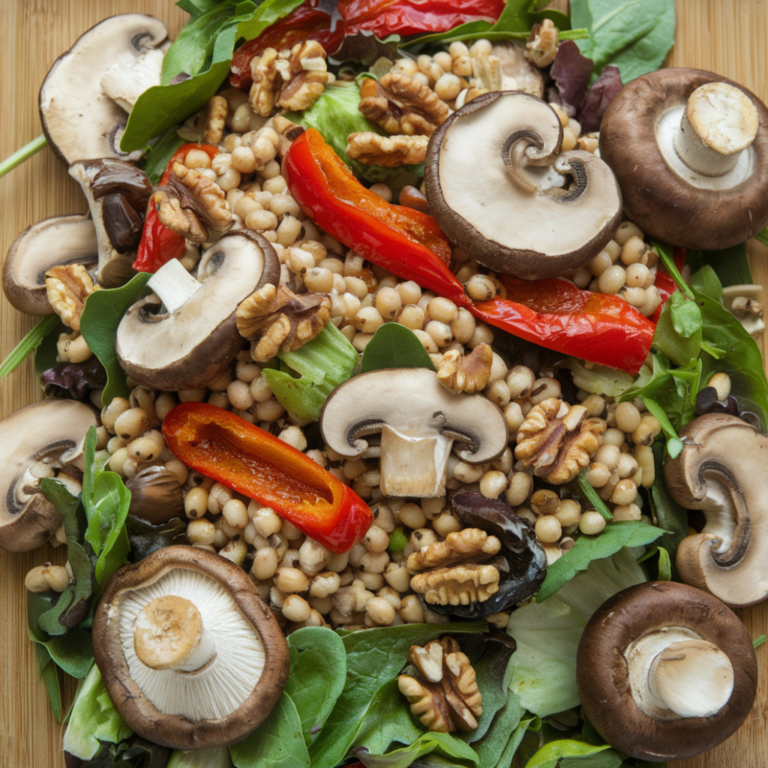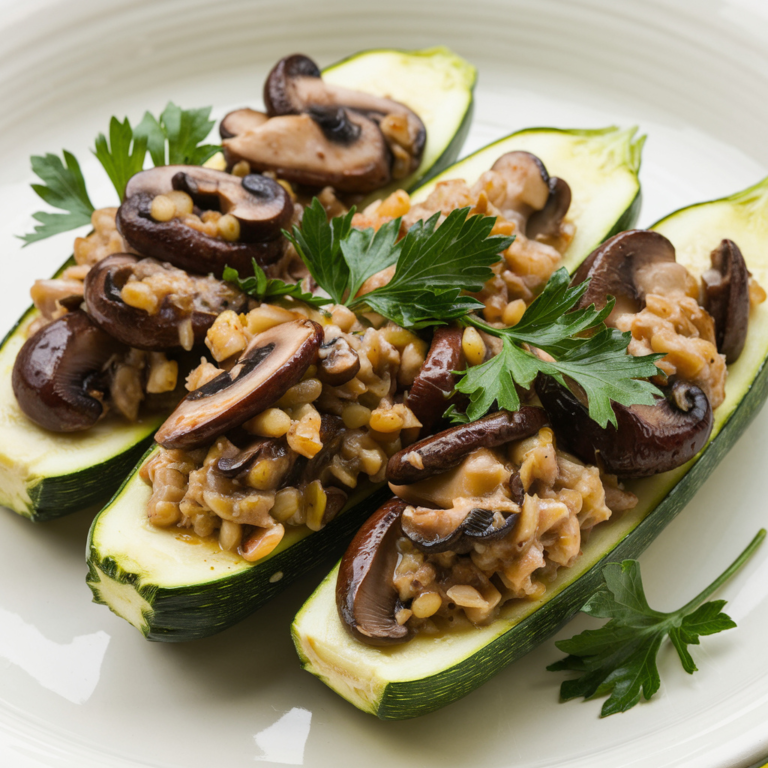
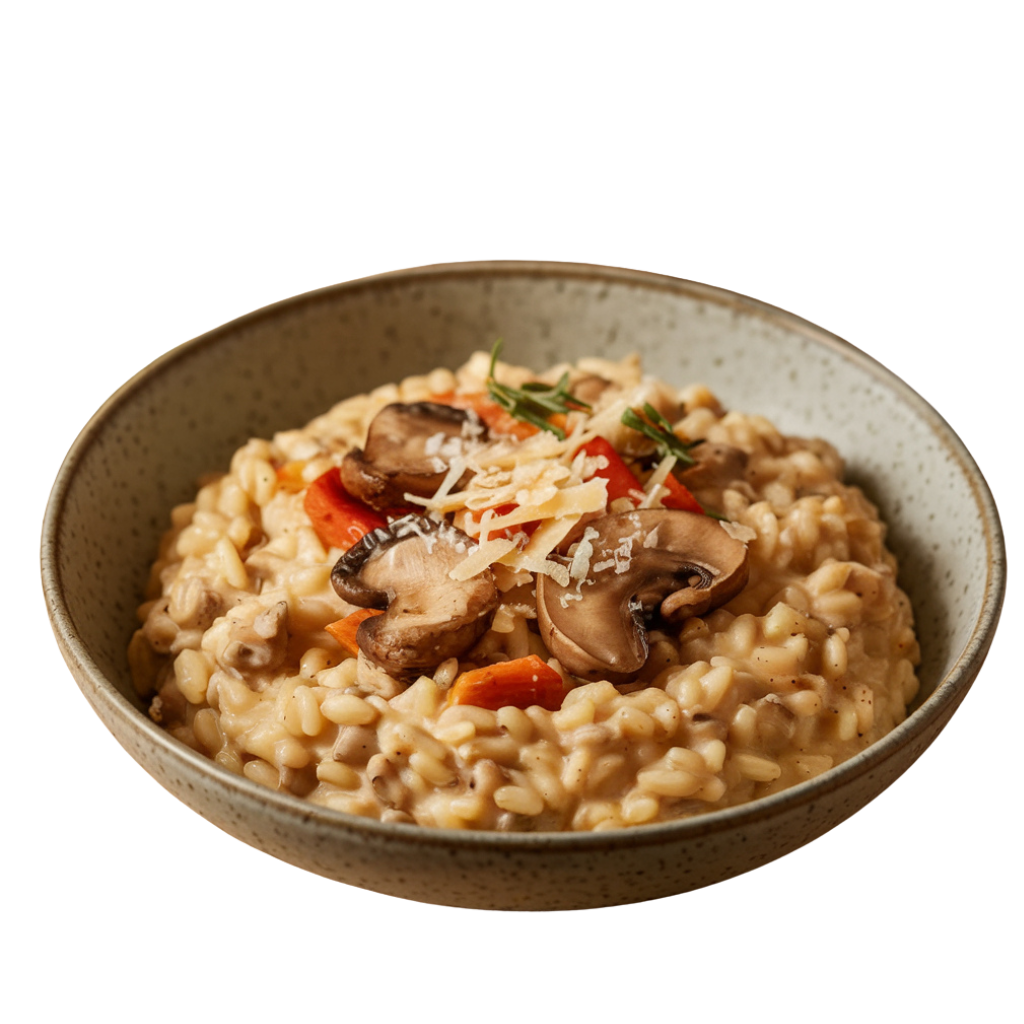
Mushroom Wheat Berry Risotto: A Creamy, Hearty Dinner Worth Making
Prep Time: 10 minutes (plus overnight soaking) | Cook Time: 1 hour 15 minutes | Total Time: ~1 hour 25 minutes | Servings: 4 | Calories: ~320 per serving
If you’ve never cooked with wheat berries before, this recipe is going to be a revelation. Wheat berries are whole, unprocessed wheat kernels — chewy, nutty, and deeply satisfying in a way that regular rice or pasta simply isn’t. When cooked slowly with warm vegetable broth, golden sautéed mushrooms, butter, and Parmesan in the style of a classic risotto, they become something genuinely extraordinary: creamy, rich, and hearty, with a texture that is unlike anything else on a dinner table.
I first made this on a grey autumn evening when I wanted something warming and substantial but didn’t want the heaviness of a pasta dish. The result was so good, I’ve made it regularly ever since. It’s the kind of meal that fills the kitchen with an incredible aroma — earthy mushrooms, sweet sautéed onion, warm broth — and delivers fully on the promise of that smell when you finally sit down to eat it.
Fair warning: this isn’t a 20-minute weeknight dinner. The wheat berries need soaking overnight, and the cooking time is about an hour. But the process is meditative, mostly hands-off, and the result is something that feels special enough for a dinner party while being simple enough for a quiet Sunday evening at home.
What Are Wheat Berries and Why Use Them Here?
Wheat berries are the whole, intact kernel of wheat — the bran, germ, and endosperm all together, before any processing removes the most nutritious parts. They’re what wheat flour is ground from, but eating them whole gives you a completely different experience: a pleasantly chewy texture, a warm, slightly nutty flavour, and a much richer nutritional profile than refined grain alternatives.
Here’s what a single cup of cooked wheat berries gives you:
- Protein: 8g — higher than white or brown rice
- Fibre: 8g — nearly a third of your daily recommended intake
- Iron: 10% of your daily recommended intake
- Magnesium: 15% of your daily recommended intake
- B vitamins: Including niacin, thiamine, and B6
- Low glycemic index — digests slowly and doesn’t cause blood sugar spikes
Compared to arborio rice (the traditional risotto grain), wheat berries have more than twice the fibre and significantly more protein. They take longer to cook and require overnight soaking, but the nutritional payoff and the textural complexity they bring to this dish are absolutely worth it.
The slow, ladle-by-ladle broth method used in traditional risotto works beautifully with wheat berries — the starch releases gradually and creates that creamy, cohesive consistency that makes risotto so satisfying.
Ingredients
For 4 servings:
- 1 cup (180g) wheat berries, soaked overnight
- 250g (about 3 cups) mushrooms, sliced — shiitake, chestnut, or button (see notes)
- 4 cups (1 litre) good quality vegetable broth, kept warm
- ½ cup (50g) Parmesan cheese, freshly grated — plus extra to serve
- 2 tablespoons butter, divided
- 1 medium onion, finely diced
- 2 garlic cloves, minced
- 1 tablespoon olive oil
- Salt and black pepper to taste
- Fresh parsley or thyme, to garnish
Optional Additions
- A splash of dry white wine — added after the onion and before the broth, it adds depth and acidity
- A handful of baby spinach or rocket — stirred in at the very end for colour and freshness
- Truffle oil — a few drops drizzled over at the end transforms this into something restaurant-level
- Lemon zest — a small pinch over the finished bowl brightens everything
- Extra roasted mushrooms — roast a handful at 200°C for 15 minutes and pile on top for texture contrast
Ingredient Notes
Wheat berries: You’ll find wheat berries in health food shops, whole food stores, and increasingly in larger supermarkets. They come as hard red, hard white, or soft varieties — any works in this recipe, though hard varieties have the most pronounced chew and nutty flavour. Soaking overnight reduces cooking time from 90 minutes down to about 45–60 minutes and improves the final texture.
Mushrooms: The choice of mushrooms makes a big difference to the depth of flavour. Shiitake mushrooms are my top recommendation — they have an intense, savoury, almost meaty flavour that pairs beautifully with the nutty wheat berries and rich Parmesan. Chestnut mushrooms are slightly earthier and work brilliantly too. Button mushrooms are milder but perfectly fine, especially if you use a generous amount. For the most flavour, use a mixture of two or three varieties.
The broth: Keep the broth warm in a separate saucepan on a low heat while you make the risotto. Adding cold broth to the pan dramatically drops the temperature and slows the cooking process. Warm broth absorbs more evenly and keeps everything at a steady simmer. Use a good quality broth — this is the liquid the wheat berries will absorb for 20–25 minutes, so its flavour matters enormously.
Parmesan: Freshly grated Parmesan from a block melts into the risotto far more smoothly than the pre-grated variety, which can be dry and clumpy. A fine grater (microplane) gives the best results. For a vegetarian version, check the label — traditional Parmesan is made with animal rennet, but vegetarian alternatives are widely available. For a vegan version, nutritional yeast makes a surprisingly good substitute — add 3–4 tablespoons in place of the Parmesan.
How to Soak Wheat Berries
This step happens the night before cooking and takes about 30 seconds of actual effort:
Place the wheat berries in a large bowl and cover with at least double their volume of cold water. Leave to soak at room temperature overnight, or for a minimum of 8 hours. They’ll absorb water and swell to about twice their size.
The next day, drain and rinse them under cold water before cooking.
Why bother soaking? Soaking breaks down phytic acid — a compound that can inhibit the absorption of certain minerals — and reduces cooking time by 30–45 minutes. It also results in a slightly more tender, evenly cooked wheat berry. If you forget to soak them, you can still make this recipe — just plan on cooking them for 90 minutes rather than 45–60.
How to Make Mushroom Wheat Berry Risotto — Step by Step
Step 1: Cook the Wheat Berries
Drain the soaked wheat berries and place them in a large pot. Cover with plenty of fresh cold water — at least 3 cups. Bring to a boil, then reduce to a steady simmer and cook for 45–60 minutes until tender but still pleasantly chewy. They should give easily under a bite but retain a slight firmness at the centre — not mushy, not rock hard. Drain and set aside.
While the wheat berries cook, warm your vegetable broth in a separate small saucepan on the lowest heat. Keep it warm throughout the cooking process.
Step 2: Sauté the Onion and Garlic
In a large, heavy-bottomed pan (a wide sauté pan or Dutch oven works best), melt 1 tablespoon of butter with the olive oil over medium heat. The oil prevents the butter from burning.
Add the finely diced onion and cook for 5–7 minutes, stirring occasionally, until soft, translucent, and just starting to turn golden at the edges. Don’t rush this — properly softened onion is the flavour foundation of the entire dish.
Add the minced garlic and cook for another 60 seconds, stirring constantly, until fragrant.
Step 3: Cook the Mushrooms
Add the sliced mushrooms to the pan. Increase the heat to medium-high and cook for 6–8 minutes without stirring too frequently — you want the mushrooms to sear and turn golden brown, not steam. Mushrooms release a lot of water as they cook; keep cooking until that water has evaporated and the mushrooms are deeply golden and slightly caramelised. This is where the rich, earthy depth of flavour comes from.
Season with a pinch of salt and pepper.
Step 4: Toast the Wheat Berries
Add the cooked, drained wheat berries to the pan with the mushroom mixture. Stir everything together and let the wheat berries toast lightly for 2–3 minutes, stirring occasionally. This step coats the wheat berries in the flavoured oil and helps develop the creamy starch coating that will make the final dish cohesive and rich.
If using white wine, add it now — pour in about 75ml (a small glass) and stir until it’s completely absorbed. The wine adds a lovely acidity that balances the richness of the butter and Parmesan.
Step 5: Add the Broth — Ladle by Ladle
This is the heart of the risotto method, and it requires patience. Using a ladle, add one portion of warm broth to the pan — roughly half a cup at a time. Stir gently and continuously as the broth absorbs into the wheat berries. When the pan is almost dry and the mixture looks cohesive, add another ladle of broth and repeat.
Continue this process for 20–25 minutes until all the broth has been absorbed. The mixture should be loose, creamy, and flowing — it should ripple gently when you shake the pan, not sit in a stiff mound. This consistency is called all’onda (wave-like) in Italian, and it’s the hallmark of a well-made risotto.
Taste as you go and adjust seasoning with salt and pepper.
Step 6: Finish with Butter and Parmesan
Remove the pan from the heat. Add the remaining tablespoon of cold butter and the freshly grated Parmesan. Stir vigorously for 60 seconds — this technique, called mantecatura, emulsifies the butter and cheese into the starchy liquid to create a glossy, creamy sauce that coats every wheat berry. The cold butter is important here: it creates a richer emulsion than warm butter would.
Taste one final time and adjust salt, pepper, and Parmesan to your liking.
If adding baby spinach or rocket, fold it in now — the residual heat will wilt it gently within 30 seconds.
Step 7: Serve Immediately
Spoon into warm bowls. Top with extra-grated Parmesan, a few grinds of black pepper, and fresh parsley or thyme. If using truffle oil or lemon zest, add them now. Serve straight away — risotto waits for nobody.
The Key to a Truly Creamy Risotto
Keep the broth warm. This is non-negotiable. Cold broth shocks the pan and disrupts the cooking process.
Don’t walk away. The constant stirring isn’t just tradition — it coaxes the starch out of the wheat berries gradually and evenly, which is what creates the creaminess.
Keep it loose. A risotto that’s too thick will seize up and become gluey. It should be slightly wetter than you think feels right in the pan — it will thicken slightly as it sits in the bowl.
The cold butter finish. Using cold butter off the heat creates a beautifully glossy, emulsified sauce. This step takes 60 seconds and makes a significant difference.
Serve immediately. Risotto does not like sitting. The wheat berries continue absorbing liquid as the minutes pass. If it thickens while waiting, stir in a splash of warm broth to bring it back to the right consistency.
Variations to Try
Wild Mushroom and Herb Version
Use a mixture of wild mushrooms — porcini, chanterelle, and shiitake if you can find them. Soak a small handful of dried porcini mushrooms in boiling water for 15 minutes and add the soaking liquid to the broth for an extraordinary depth of flavour. Finish with fresh thyme instead of parsley.
Lemon and Asparagus Wheat Risotto
Add blanched asparagus tips (cut into 3cm pieces and blanched for 2 minutes) along with the final ladle of broth. Finish with the zest and juice of half a lemon instead of just using Parmesan. Spring on a plate.
Vegan Version
Replace the butter with olive oil (use 3 tablespoons total). Replace the Parmesan with 3–4 tablespoons of nutritional yeast. The result is still deeply savoury and creamy — nutritional yeast has a remarkably similar flavour profile to Parmesan.
Truffle Mushroom Risotto
Use chestnut and button mushrooms in the main recipe, then drizzle 1–2 teaspoons of truffle oil over each bowl just before serving. Add a few shavings of truffle if you’re feeling extravagant. This version is genuinely dinner-party worthy.
Roasted Vegetable Addition
Roast a handful of diced butternut squash, courgette, or cherry tomatoes at 200°C for 20 minutes while the risotto cooks. Fold the roasted vegetables through at the end or pile them on top for colour, texture, and extra sweetness.
Meal Prep and Storage Tips
Make it ahead: The wheat berries can be cooked and stored in the fridge for up to 3 days — this saves the longest part of the cooking process on the day you want to eat them. At night, start from Step 2 and proceed as normal.
Reheating: Risotto thickens significantly as it cools and the wheat berries continue absorbing liquid. To reheat, add a generous splash of warm broth or water, stir over medium heat until the desired consistency is reached. Taste and re-season.
Storage: Store leftovers in an airtight container in the fridge for up to 3 days.
Risotto cakes: Leftover cold risotto can be shaped into small patties and pan-fried in a little olive oil until golden and crispy on both sides. Serve with a green salad — a completely different but equally delicious way to eat the leftovers.
What to Serve Alongside
This risotto is a complete meal on its own, but if you’re building a larger dinner:
- A simple green salad dressed with lemon and olive oil — the freshness cuts through the richness beautifully
- Warm, crusty bread for mopping up any remaining sauce in the bowl
- Roasted tenderstem broccoli or asparagus on the side
- A glass of dry white wine — Pinot Grigio, Sauvignon Blanc, or an unoaked Chardonnay all pair well with the earthy mushrooms and creamy Parmesan
Frequently Asked Questions
Can I make this without soaking the wheat berries overnight? Yes, but the cooking time increases to 80–90 minutes. You can also quick-soak them by covering with boiling water for 2 hours, which cuts some of the cooking time. Overnight soaking is ideal, but it’s not the end of the world if you forget.
Can I use farro or spelt instead of wheat berries? Yes — farro and spelt are closely related to wheat berries and work beautifully in this recipe. Farro in particular is traditional in Italian cooking and produces a very similar result. Cooking times will vary slightly — check the packet.
Is this recipe suitable for vegetarians? Yes, with one caveat: traditional Parmesan is made with animal rennet, which means it’s not suitable for vegetarians. Look for a vegetarian hard cheese labelled “suitable for vegetarians” and use that instead — the flavour is virtually identical.
Why is my risotto too thick? This happens when it’s been sitting too long or when too much broth was absorbed during cooking. Fix it easily by stirring in a ladleful of warm broth over medium heat until it loosens to the right consistency.
Can I make this in a pressure cooker? Yes. Sauté the onion, garlic, and mushrooms using the sauté function. Add the wheat berries and all the broth at once. Cook on high pressure for 25 minutes, then natural release for 10 minutes. Stir in the butter and Parmesan and serve. The texture will be slightly different from the traditional method — softer and less individually defined — but still delicious.
How do I know when the wheat berries are done? Perfectly cooked wheat berries are tender throughout but still have a satisfying chew — similar to al dente pasta. Bite one in half: it should be soft all the way through with no hard, chalky centre. If there’s still a hard centre, keep cooking and testing every 5 minutes.
Nutrition Information (Per Serving)
| Nutrient | Amount |
| Calories | ~320 kcal |
| Carbohydrate | 45g |
| Protein | 12g |
| Fat | 12g |
| Fibre | 8g |
| Sugar | 4g |
| Iron | 10% DV |
| Magnesium | 15% DV |
| Calcium | 18% DV |
Values are approximate and will vary based on mushroom variety, cheese quantity, and any optional additions.
Final Thoughts
Mushroom wheat berry risotto is the kind of dish that rewards the time you give it. It’s not the fastest weeknight dinner, but it is one of the most satisfying — deeply flavoured, beautifully textured, and nourishing in a way that’s hard to articulate until you’ve had a bowl.
The wheat berries bring something to this dish that regular risotto rice simply can’t: a chewiness and nuttiness that makes every mouthful feel substantial and interesting. Combined with the earthy mushrooms, the rich buttery broth, and the sharpness of the Parmesan, it’s a combination that genuinely deserves a place in your regular dinner rotation.Give it a try on your next relaxed evening in and let me know in the comments how it went. And for more hearty, healthy dinner ideas, check out my Lemon Garlic Shrimp with Zoodles and Easy Quinoa Stuffed Bell Peppers.
Happy cooking!
Made this recipe? Share it on Pinterest or Facebook — I love seeing your bowls!