Salmon Salad with Avocado and Walnuts: A Nutritious and Flavourful Lunch
Prep Time: 10 minutes | Cook Time: 12 minutes | Total Time: 22 minutes | Servings: 2 | Calories: ~520 per serving
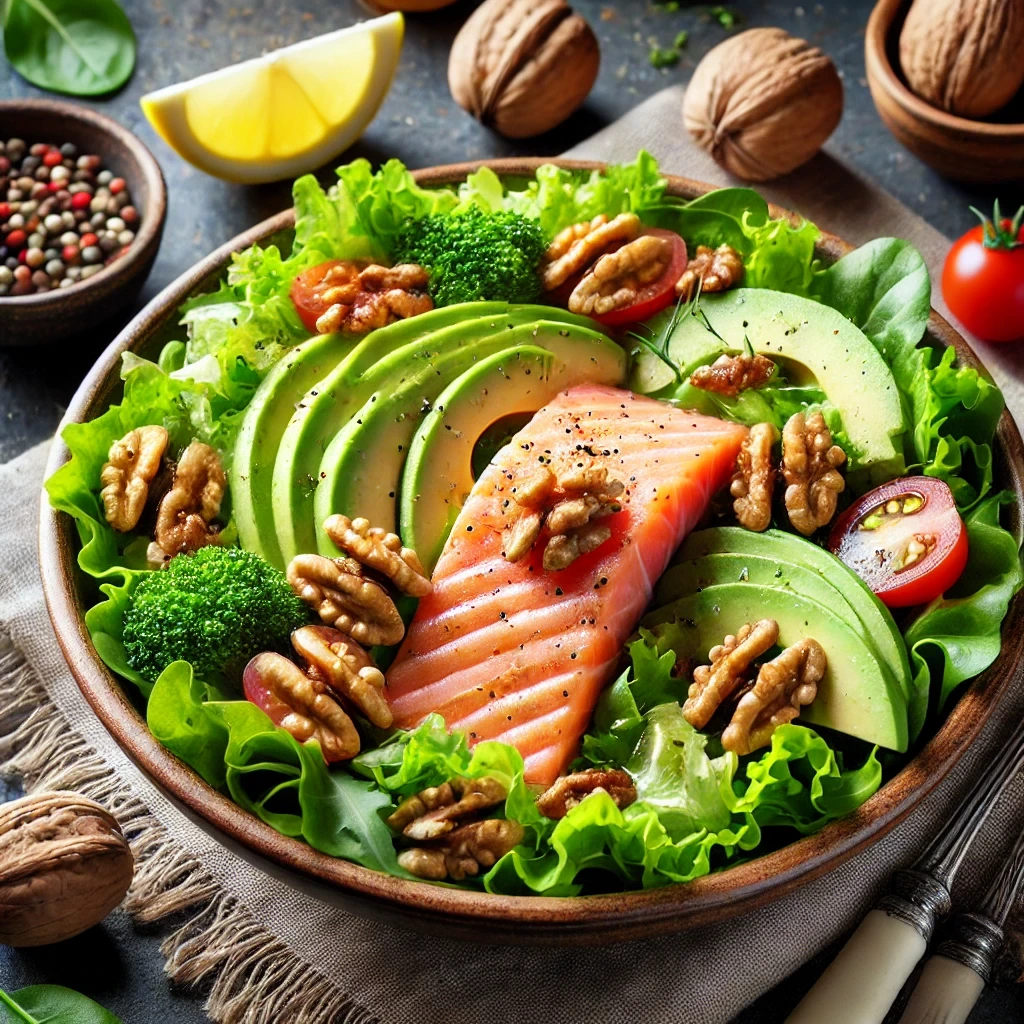
This is the kind of salad that makes you rethink what a salad can be. Not a pile of sad leaves with a token piece of protein on top — but a genuinely substantial, beautifully composed meal that you actually look forward to eating. Flaky, golden-seared salmon. Creamy sliced avocado. Crunchy toasted walnuts. Cherry tomatoes, crisp cucumber, and a handful of peppery rocket. All pulled together with a bright lemon vinaigrette that ties every element together.
It takes about 20 minutes start to finish, and it works equally well as a quick weekday lunch, a light dinner, or something impressive to serve to guests. I’ve been making versions of this salad for years, and this particular combination — the richness of the salmon and avocado balanced by the crunch of the walnuts and the sharpness of the dressing — is the one I keep coming back to.
Why This Combination Is So Nutritionally Powerful
Every ingredient in this salad earns its place, and they complement each other in ways that go beyond just tasting good together.
Salmon is one of the richest sources of omega-3 fatty acids available. A single fillet provides more than the recommended daily intake of EPA and DHA — the long-chain omega-3s most strongly linked to cardiovascular and brain health. According to Harvard T.H. Chan School of Public Health, regular consumption of omega-3-rich fish is associated with reduced risk of heart disease, improved cognitive function, and lower levels of systemic inflammation. Salmon is also high in vitamin D — one of the most commonly deficient nutrients in the UK and US — and provides around 80% of the daily recommended intake per fillet.
Avocado adds creaminess and healthy monounsaturated fats that help your body absorb the fat-soluble vitamins in the other ingredients. It also provides potassium (more per serving than a banana), folate, vitamin E, and vitamin K. The oleic acid in avocado — the same fatty acid that makes olive oil beneficial — has been associated with reduced inflammation and improved heart health markers.
Walnuts are the only nut with significant amounts of plant-based omega-3 fatty acids (ALA), which complements the marine omega-3s in the salmon. According to Healthline, walnuts are also one of the best dietary sources of antioxidant polyphenols — compounds associated with reduced oxidative stress and lower risk of chronic disease. Toasting them for two minutes transforms their flavour from mild to deeply nutty and warm — a step worth never skipping.
Rocket (arugula) provides the essential contrast — its peppery, slightly bitter bite cuts through the richness of the salmon and avocado, keeping every forkful feeling fresh and balanced. It’s also a good source of vitamin K and nitrates, which support healthy blood pressure.
Ingredients
For 2 servings:
For the salad:
- 2 salmon fillets (about 150g / 5oz each), skin on or off
- 1 ripe avocado, sliced
- ⅓ cup (35g) walnuts, roughly chopped
- 2–3 cups (60g) rocket (arugula) or mixed salad leaves
- ½ cup (75g) cherry tomatoes, halved
- ½ cucumber, sliced into half moons
- ¼ small red onion, very thinly sliced
- Fresh dill or flat-leaf parsley, to garnish
- 1 tsp olive oil for cooking
- Salt and black pepper
For the lemon vinaigrette:
- 3 tbsp extra virgin olive oil
- 1½ tbsp fresh lemon juice (about half a lemon)
- 1 tsp Dijon mustard
- 1 tsp honey
- 1 small garlic clove, grated
- Salt and black pepper to taste
Ingredient Notes
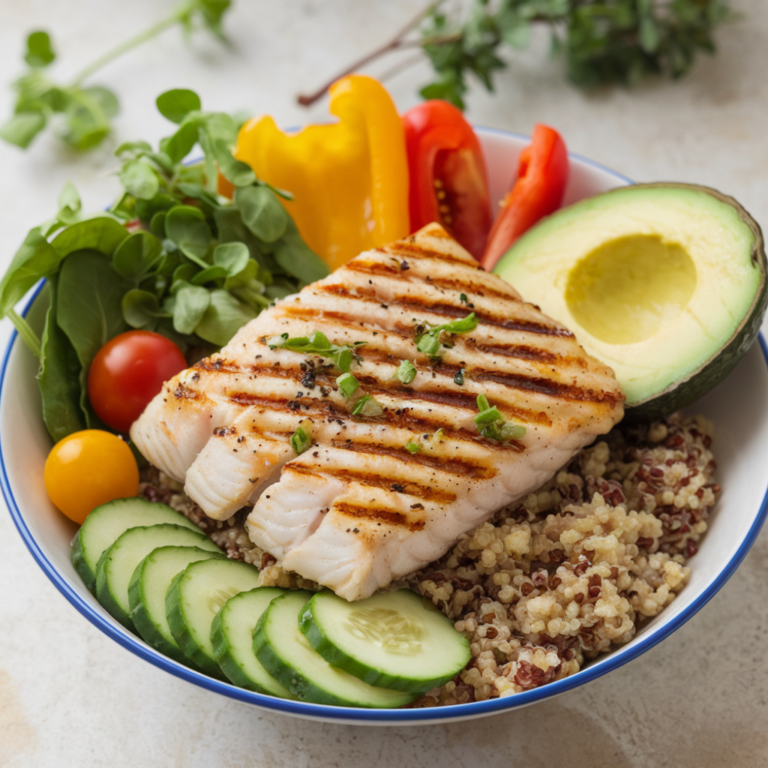
Salmon — fresh, smoked, or canned: Fresh pan-seared salmon gives the best result — the golden crust and moist flaky interior are genuinely special. Smoked salmon is an excellent no-cook alternative with a beautiful depth of flavour. Good quality canned salmon (wild-caught, packed in water) is a fast and affordable option — drain well and flake gently. For a complete comparison of preparation methods, see our Healthy Fish Bowl recipe → which uses a baked crust method as an alternative.
Which salmon to buy: Wild-caught salmon has a richer flavour and deeper colour than farmed. Sockeye salmon is the most flavourful and nutritious — its deep red flesh is particularly high in astaxanthin, a carotenoid antioxidant responsible for its colour.
Avocado: Choose one that yields gently when pressed — not rock hard, not mushy. The skin of a Hass avocado will be very dark (almost black) when ripe. If underripe, leave on the counter for 1–2 days.
Walnuts: Toasting is optional but strongly recommended. Two minutes in a dry pan at medium heat transforms the flavour entirely — from mild and slightly bitter to warm, rich, and nutty.
The dressing: Dijon mustard does two things here — it adds a gentle sharpness that balances the richness of the salmon and avocado, and it acts as an emulsifier, keeping the oil and lemon juice combined rather than separating. Don’t substitute with yellow mustard.
How to Make Salmon Salad with Avocado and Walnuts
Step 1: Make the Dressing
In a small jar or bowl, combine the olive oil, lemon juice, Dijon mustard, honey, and grated garlic. Season with salt and pepper. Whisk or shake vigorously until fully emulsified — it should look slightly creamy. Taste: it should be tangy and bright with a slight sweetness. Adjust lemon or salt as needed. Set aside.
Step 2: Toast the Walnuts
Place the chopped walnuts in a dry frying pan over medium heat. Shake the pan or stir frequently for 2–3 minutes until they smell deeply nutty and have turned a shade darker. Tip immediately onto a plate to stop cooking — they’ll continue toasting from residual heat if left in the pan. Cool before using.
Step 3: Cook the Salmon
Pat the salmon fillets completely dry with kitchen paper — this is the most important step for getting a good sear and golden crust. Season both sides generously with salt and black pepper.
Heat 1 teaspoon of olive oil in a frying pan over medium-high heat until hot and shimmering. Place the salmon skin-side up (or presentation side down if skinless). Cook for 5–6 minutes without moving — this builds the golden crust. Flip carefully and cook for another 4–5 minutes on the other side until just cooked through.
The salmon is perfectly done when it flakes easily at the thickest point but still looks slightly translucent in the very centre. Remove from the pan and rest for 3 minutes before flaking into generous pieces.
Step 4: Prepare the Vegetables
Halve the cherry tomatoes, slice the cucumber, and very thinly slice the red onion. For a milder onion flavour, soak the sliced red onion in cold water for 5 minutes and drain — this removes the harsh bite while keeping the colour.
Slice the avocado: halve lengthwise, remove the stone, and either slice in the skin and scoop out, or peel and slice on a board. Squeeze a little lemon juice over the slices immediately to prevent browning.
Step 5: Assemble and Dress
Divide the rocket between two plates or bowls. Arrange the cherry tomatoes, cucumber, and red onion over the leaves. Lay the avocado slices on one side. Place the flaked salmon in the centre — the star of the dish, so give it prominence.
Scatter the toasted walnuts over everything. Drizzle the lemon vinaigrette over the whole salad. Finish with fresh dill or parsley and a crack of black pepper.
Serve immediately — this salad is best eaten fresh.
How to Get Perfectly Cooked Salmon Every Time
Salmon is one of those ingredients where the difference between perfectly cooked and overcooked is dramatic. Here’s how to nail it consistently:
Dry the salmon thoroughly. Moisture on the surface creates steam rather than sear, which means no golden crust and less flavour. Pat completely dry with kitchen paper right before cooking — not before, as it can re-absorb moisture if left sitting.
Start with a genuinely hot pan. The pan should be properly hot — a drop of water should sizzle and evaporate instantly. A cold pan causes sticking and uneven cooking.
Don’t move it. Once the salmon is in the pan, leave it alone for the full 5–6 minutes. Moving it prevents the crust from forming and may cause it to stick. Set a timer.
Use the touch test. Press the thickest part of the fillet gently with your finger. Raw salmon feels very soft. Perfectly cooked salmon has some resistance but still feels slightly springy. Overcooked salmon feels firm and doesn’t spring back.
Rest before flaking. Two to three minutes of resting allows the juices to redistribute through the fillet. Flaking immediately after cooking means those juices end up on the plate rather than in the fish.
The Lemon Vinaigrette in Detail
This dressing is deceptively simple and worth making properly. A few notes:
Fresh lemon juice is essential. Bottled lemon juice is more acidic and has a slightly flat, processed taste. Fresh juice is brighter and more complex — and in a dressing this simple, it’s the difference you can taste.
The ratio matters. Two parts oil to one part lemon juice (3 tbsp olive oil to 1½ tbsp lemon) creates a balanced dressing that coats the leaves without overwhelming them. Adjust based on your taste preference — more lemon for brightness, more oil for richness.
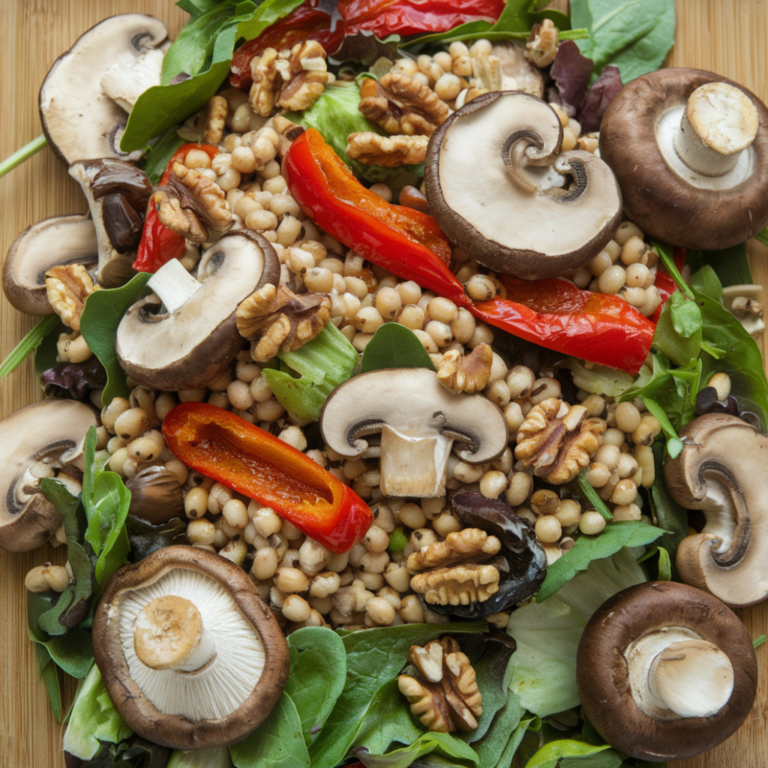
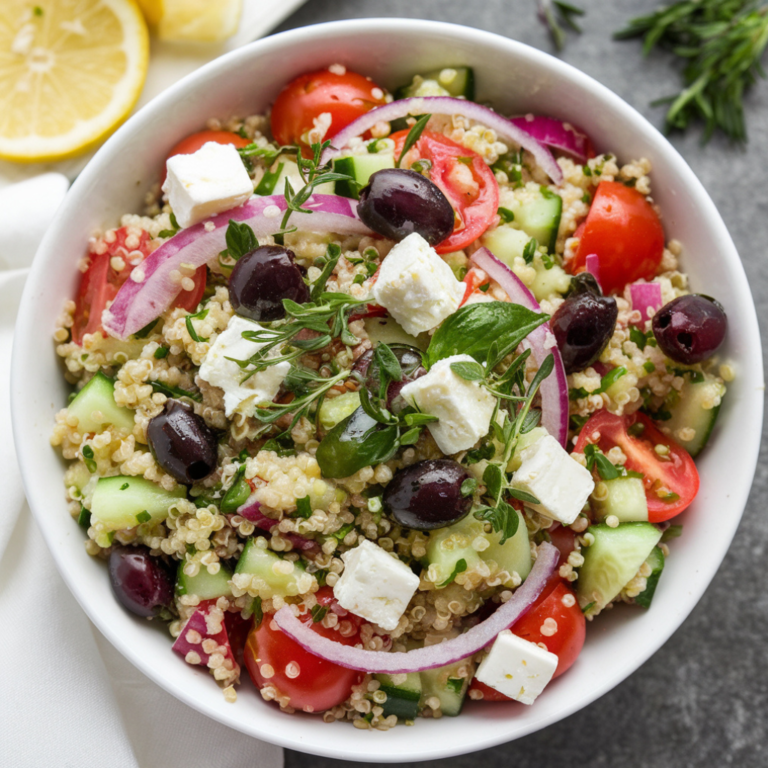
Make extra. This dressing keeps in a sealed jar in the fridge for up to a week and works beautifully on any salad on this site — try it on the Mediterranean Quinoa Salad → or drizzled over the Dense Bean Salad →
Variations to Try
Smoked Salmon Version (Zero Cooking Required)
Replace the pan-seared salmon with 150g of smoked salmon, torn into strips. No cooking at all — just assemble and dress. Takes 5 minutes. The smokiness pairs beautifully with the lemon dressing and creamy avocado. A perfect option for a fast weekday lunch.
Asian-Inspired Sesame Version
Replace the lemon vinaigrette with: 2 tbsp soy sauce, 1 tbsp sesame oil, 1 tbsp rice wine vinegar, 1 tsp honey, and 1 tsp grated ginger. Replace walnuts with toasted sesame seeds. Add thinly sliced cucumber and edamame. Top with sliced spring onion.
Mediterranean Version
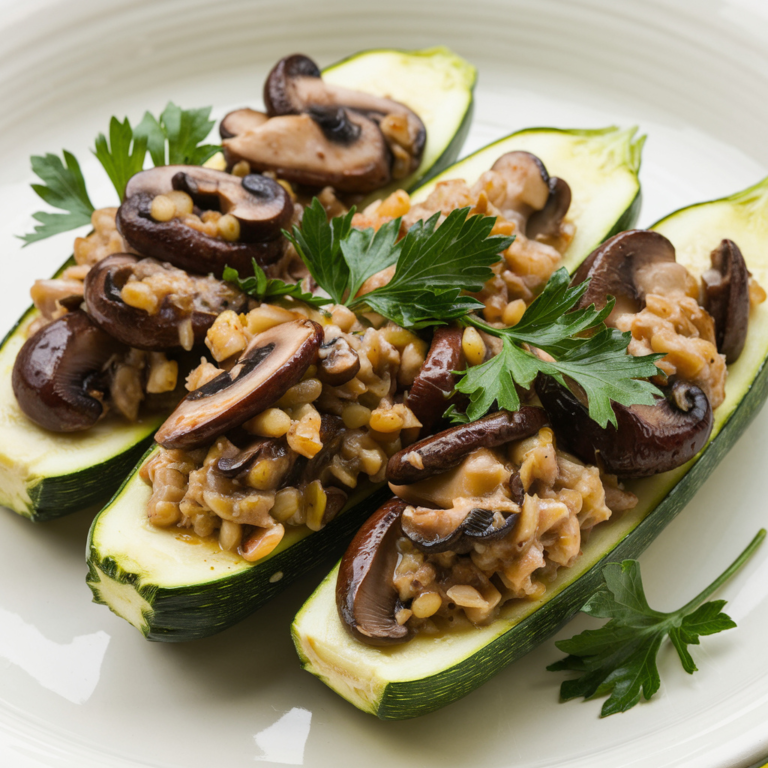
Add Kalamata olives, crumbled feta, and thinly sliced roasted red peppers. Swap rocket for cos lettuce and use a lemon-oregano dressing (add ½ tsp dried oregano to the vinaigrette). This flavour profile pairs well with the Mushroom Wheat Berry Risotto → as a starter.
Grain Bowl Version
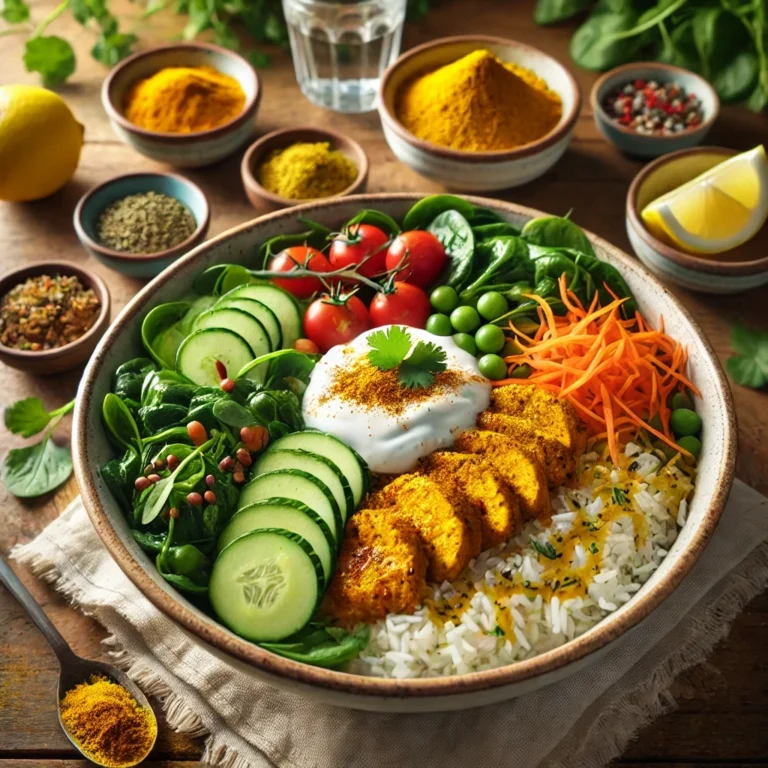
Add a base of cooked quinoa or brown rice under the salad leaves to make it more substantial. This version is ideal for meal prep — the grains keep well and make the salad genuinely filling. For more grain bowl inspiration, see the Turmeric Chicken Bowl →
Budget-Friendly Canned Salmon Version
Use two cans of good-quality wild-caught salmon (drained and flaked) instead of fresh. Season the flaked salmon with a squeeze of lemon, a tiny drizzle of olive oil, and a pinch of salt and pepper before adding to the salad. The texture is softer than fresh, but the flavour is excellent.
Meal Prep Guide
This salad doesn’t store well fully assembled — the rocket wilts, the avocado browns, and the dressing softens everything. But with a little planning, you can have it ready in under 5 minutes on any day:
Cook the salmon ahead: Pan-sear, cool completely, and refrigerate in a sealed container for up to 2 days. Flake it cold directly onto the salad — cold salmon works beautifully in this dish and is arguably easier to handle.
Make the dressing in advance: Keep in a sealed jar in the fridge for up to a week. Shake well before using, as the oil and lemon will separate.
Toast walnuts in bulk: Make a large batch and keep in an airtight jar at room temperature for up to 2 weeks. Toast once, use all week.
Prep the vegetables: Halve tomatoes and slice the cucumber up to 24 hours ahead. Store separately in sealed containers.
Avocado: Prepare fresh each time to prevent browning. Store a halved avocado with the stone in, tightly wrapped in cling film.
For more meal prep strategies across the site, the Anti-Inflammatory Meal Plans guide → includes this salad as part of a full week of prep-friendly meals.
What to Serve Alongside
This salad is a complete meal on its own, but it also pairs beautifully with:
- Warm sourdough or a whole-grain roll for mopping up the dressing
- A bowl of roasted tomato soup — a classic pairing with salmon
- A glass of dry white wine — Sauvignon Blanc or an unoaked Chardonnay is both excellent
- Steamed asparagus or tenderstem broccoli for extra vegetables
- As a starter before the Roasted Chicken with Brussels Sprouts → for a complete dinner party menu
Frequently Asked Questions
Can I use canned salmon instead of fresh? Yes — wild-caught canned salmon works well and is significantly more affordable. Choose salmon packed in water, drain thoroughly, and season with a squeeze of lemon and a pinch of salt before adding to the salad. The texture is softer than fresh, but the flavour is good.
How do I stop the avocado from going brown? Lemon juice slows oxidation significantly — make sure it coats all the avocado surfaces as soon as it’s cut. Assembling just before eating also helps. If prepping ahead, keep the avocado uncut until the last possible moment.
Can I substitute the walnuts for something else? Yes — toasted pecans, flaked almonds, or pumpkin seeds all work well. For a nut-free version, toasted sunflower seeds give a similar crunch without the allergen concern.
Can I serve this warm or cold? Both work well. Freshly cooked warm salmon with cool avocado and crisp leaves is a wonderful contrast. Cold cooked salmon from the fridge is equally good — arguably easier to flake cleanly. Try both and choose your preference.
Is this salad suitable for a keto diet? Yes — with around 6g of net carbs per serving (mostly from the cherry tomatoes), this fits comfortably within keto macros. For more low-carb meal ideas, see the Low-Carb Meal Plans guide →
What if I don’t like rocket? Any salad leaf works. Baby spinach is the mildest option. Cos lettuce adds crunch without bitterness. Mixed leaves give variety. The peppery bite of rocket is my personal preference with salmon — it provides a contrast that softer leaves can’t — but use whatever you enjoy most.
Nutrition Information (Per Serving)
| Nutrient | Amount |
| Calories | ~520 kcal |
| Carbohydrates | 14g |
| Protein | 38g |
| Fat | 36g |
| Fibre | 7g |
| Sugar | 5g |
| Omega-3 (EPA + DHA) | ~2,500mg |
| Vitamin D | 80% DV |
| Vitamin K | 85% DV |
| Potassium | 1,100mg |
Values are approximate and will vary based on salmon size, avocado, and dressing quantity.
Final Thoughts
Salmon salad with avocado and walnuts is one of those recipes that delivers far more than its simplicity suggests. Twenty minutes, a handful of fresh ingredients, and you have something that looks beautiful, tastes genuinely special, and provides exceptional nutrition — omega-3s, healthy fats, complete protein, and a full range of vitamins in one bowl.
The smoked salmon version with zero cooking is my recommendation for the busiest days. The pan-seared version is my recommendation when you want something that feels like a proper treat. Either way, the lemon vinaigrette is what ties the whole dish together — make a batch and keep it in the fridge.
For more healthy and satisfying lunch and dinner ideas, check out the Avocado Chicken Wraps →, Mediterranean Quinoa Salad →, and Healthy Fish Bowl →
Happy cooking!
Made this salad? Share it on Pinterest or Facebook — I love seeing your plates!